 Reviews



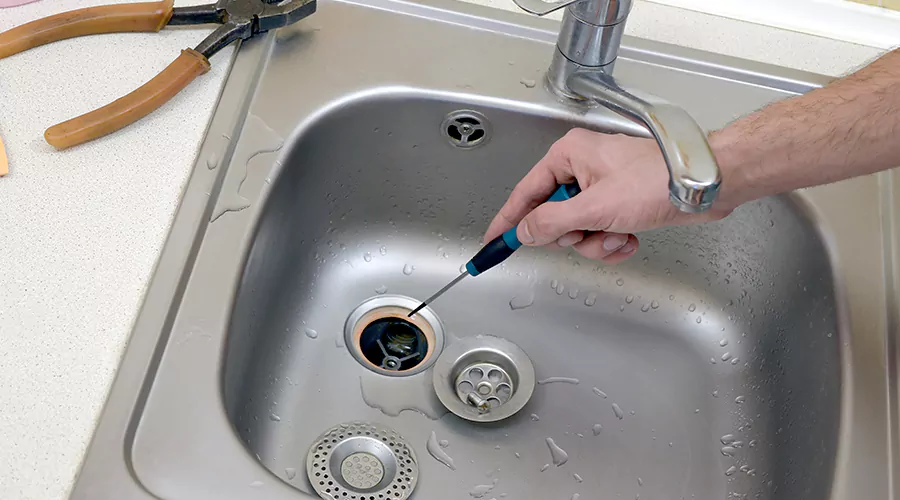
A clogged kitchen sink is fixed properly only when the material causing the restriction is removed, not when standing water temporarily disappears. Kitchen sink drain clearing costs about $110 to $215 professionally in 2026, while deeper drain cleaning averages $246. Kitchen plumbing can also address recurring clogs, drain restrictions, and related water-flow issues throughout the kitchen.
The supplied keyword kitchen sink clogged has 5,000 average monthly searches.
This guide focuses on diagnosing a clog that does not stay fixed after a simple first attempt.
Why Does a Kitchen Sink Stay Clogged?
A kitchen sink often remains clogged because grease and food extend farther down the pipe than the visible drain opening. Removing only surface debris can open a small passage without removing the main restriction.
- The P-trap may contain food.
- The disposal outlet can also be restricted.
- Grease can coat the horizontal pipe.
- A deeper branch drain can hold the blockage.
Current kitchen-drain guidance identifies grease and food buildup as common causes of persistent kitchen clogs.
The supplied keyword blocked kitchen sink has the same search volume as the primary clog query.
A lasting repair depends on finding how far downstream the blockage extends.
How Can You Tell Where the Clog Is?
The way the sink reacts can help locate the restriction. Water backing into both bowls of a double sink often means the clog sits after the drains join. A problem limited to the disposal side can point toward the disposal or its outlet.
| Symptom | Likely Area | First Check | Typical 2026 Cost |
|---|---|---|---|
| One side slow | Local drain or disposal | Drain opening | Often DIY |
| Both bowls back up | Shared kitchen drain | P-trap | $0 to $50 DIY |
| Trap is clear | Wall-side pipe | Manual auger | $110 to $215 |
| Other fixtures slow | Deeper drain | Professional diagnosis | $147 to $352+ |
Professional drain cleaning costs between $147 and $352 in 2026.
A local kitchen sink clog is usually less expensive than a blockage farther down the plumbing system.
What Are the Signs That the First Fix Did Not Work?
A kitchen drain should remain clear during normal washing after the obstruction is removed. Temporary improvement is a sign that part of the clog may still be present.
- The sink slows again the same day.
- Water drains only when the faucet is off.
- The second bowl starts filling.
- The disposal side remains slow.
- Gurgling continues after cleaning.
- Food odor returns quickly.
- The sink empties slowly after being filled.
- A plunger improves flow only briefly.
- The P-trap keeps collecting grease.
- Other drains begin slowing.
A repaired sink should keep up with continuous normal faucet flow.
If it cannot, the available pipe opening is still restricted.
Should You Check the Garbage Disposal First?
Yes. A garbage disposal can mimic a clogged sink when the grinding chamber is jammed or its outlet is blocked. Confirm that the disposal operates normally before disassembling the drain.
- Turn off the electrical supply before inspection.
- Do not reach into the grinding chamber.
- Check the reset button if the model has one.
- Use the manufacturer-approved turning method for a jammed disposal.
- Restore power only after tools are removed.
The supplied keyword clogged garbage disposal has 5,000 average monthly searches.
If the disposal turns but the sink does not drain, the obstruction may be beyond the unit.
A garbage disposal sink still shares downstream plumbing with the kitchen drain.
How Do You Fix a Clog Near the Drain Opening?
Remove standing water and pull visible debris first. A kitchen strainer can collect food directly below the opening. This shallow material should be removed before stronger clearing methods are used.
- Wear gloves.
- Remove the strainer.
- Clean food from the opening.
- Check for grease deposits.
- Wipe the accessible area.
- Test with a small amount of water.
If the sink remains slow, move deeper.
The purpose of this first step is diagnosis as much as cleaning.
A clog visible at the surface should not require a snake before that material has been removed.
How Do You Fix the Clog With a Plunger?
A sink plunger can loosen material near the trap or horizontal drain. Double-bowl sinks require the unused drain to be sealed.
- Add enough water to cover the plunger rim.
- Seal the second bowl.
- Cover the drain completely.
- Push downward.
- Pull upward.
- Maintain the seal.
- Repeat several times.
Home Depot recommends plunging as an early mechanical method for kitchen sink blockages.
Do not use extreme force.
Controlled pressure changes are more useful than splashing water around the basin.
Test the drain before moving to pipe disassembly.
How Do You Fix a Clog in the P-Trap?
The P-trap can collect food and grease because its curved shape holds water by design. It is also one of the easiest drain sections to inspect directly.
- Place a bucket underneath.
- Loosen the trap connections.
- Remove the curved section.
- Empty it into the bucket.
- Clean the interior.
- Inspect each washer.
- Reinstall the trap.
- Tighten the connections by hand.
- Check for leaks.
The kitchen sink drain pipe should be inspected beyond the trap if the trap comes out clean.
A clogged trap can be fixed immediately once the material is physically removed.
A clean trap tells you that the blockage is farther downstream.
How Do You Fix a Deeper Clog?
A manual drain auger can enter the wall pipe after the P-trap is removed. This gives the cable direct access to the branch drain.
- Feed the cable gradually.
- Rotate when resistance appears.
- Advance another short distance.
- Pull the cable back.
- Remove grease or food.
- Repeat until resistance decreases.
- Reassemble the plumbing.
- Test the sink.
Bob Vila estimates basic DIY sink-drain clearing at about $0 to $50 with a working time near 30 minutes.
A cable that reaches its practical length without changing the drain may not be reaching the actual blockage.
Should You Use Chemical Drain Cleaner?
Chemical drain cleaner should not be the default fix for a persistent kitchen clog. Grease mixed with solid food can form a blockage that is better removed mechanically.
- Do not mix chemical products.
- Never add bleach after a drain opener.
- Avoid disassembling the P-trap while corrosive liquid is inside.
- Do not snake a drain containing unknown chemicals.
A chemical that remains in standing water creates an exposure risk during later mechanical work.
The supplied keyword best drain unclogger shows search interest but does not mean chemicals are the best first repair for every kitchen clog.
Physical removal lets you verify that material has actually left the drain.
How Can You Test the Repair?
A fixed sink should drain a full basin quickly without backing into the second bowl. Testing with a large volume gives a better result than watching a slow faucet trickle.
- Close the stopper.
- Fill the basin partway.
- Release the stopper.
- Watch the drain.
- Check the second bowl.
- Inspect beneath the sink.
- Repeat the test.
A drain that handles a full basin without hesitation is much more likely to be genuinely clear.
If the water rises in the second side, a shared section of pipe remains restricted.
When Should You Call a Professional?
Professional help becomes appropriate when a manual auger cannot restore flow or the clog repeatedly returns. A blockage affecting several fixtures indicates that the problem may lie beyond the kitchen sink plumbing.
Kitchen sink drain cleaning costs about $110 to $215 in 2026. General professional drain cleaning ranges from $147 to $352.
Professional diagnosis is reasonable when:
- The P-trap is clean but the sink stays blocked.
- A hand auger cannot clear the pipe.
- Multiple fixtures back up together.
- The clog returns repeatedly.
- Drain joints begin leaking.
- Wastewater comes back through the sink.
Longer drain equipment can reach areas that household tools cannot.
How Can You Keep the Repair From Failing Again?
The strongest prevention step is keeping cooking grease out of the drain. Even a small amount can cool against the pipe wall and give food material something to stick to.
- Use a sink strainer.
- Scrape plates first.
- Dispose of oil separately.
- Clean the disposal properly.
- Run adequate water while using the disposal.
- React to slow drainage early.
The supplied keyword cleaning kitchen sink drain has 5,000 average monthly searches and fits this preventive intent.
Routine surface cleaning is easier than removing compacted material later.
Conclusion
To fix a clogged kitchen sink, find the part of the plumbing that still contains the obstruction. Start with the drain opening and garbage disposal. Plunge the sink before opening the P-trap. If the trap is clear, use a hand auger in the wall-side drain. A clog that quickly returns or affects other fixtures may require deeper diagnosis. This week, clean the strainer and keep all cooking grease out of the sink.
Frequently Asked Questions
Why does my kitchen sink clog again after plunging?
The plunger may have opened only a small path through the blockage. More material can remain farther down the pipe.
Can the P-trap cause a kitchen sink clog?
Yes. Food and grease can collect inside the curved section beneath the sink.
Why does one side of my double sink back up into the other?
The clog is often located after both sink drains join the shared waste pipe.
Can a garbage disposal cause a clog?
Yes. Food can remain inside the unit or build up in the disposal outlet.
How do I know if the clog is deeper than the kitchen sink?
Other slow fixtures or a clean P-trap combined with continued backup can point toward a deeper drain restriction.